

How to visit the Colosseum: tickets, access and practical tips
Visiting the Colosseum requires a little more planning than simply approaching the monument and starting your tour. The reserved time, the type of ticket and the areas included determine how the experience is organised, especially if you also want to explore the Roman Forum and Palatine Hill.
Preparing your documentation, transport and available time in advance helps to avoid unexpected issues. If you are already planning your trip, you can check the available options and book your Colosseum tickets.
What you need to know before visiting the Colosseum
Tickets and advance booking
Access to the Colosseum is scheduled for a specific time slot and the number of places is limited. Booking in advance allows you to choose from the available options and fit the visit into your Rome itinerary, which is especially useful during periods of high demand.
Before purchasing, check which areas are included in the ticket. Some options include the general route through the amphitheatre, while others add the Arena or the Underground. A reference to the Colosseum does not mean that all its areas are included, so it is advisable to check the product details.
Named tickets and documentation
Tickets are nominative and the details of each visitor must be entered correctly during the booking process. The name on the ticket must match the original and valid identity document presented at the entrance; this condition also applies to minors.
Check the names before completing your purchase and carry your documentation throughout the visit. A discrepancy between the visitor's identity and the name shown on the ticket may prevent access, even if the booking and payment have been completed.
Opening hours and admission time
Opening hours and last admission times vary throughout the year. For this reason, it is preferable to check the updated information for the specific date rather than relying on opening hours seen months earlier. The time printed on the ticket corresponds to admission to the Colosseum and must be respected.
Arrive with enough time to locate the entrance and pass through the security check. As a general guideline, the park recommends arriving around 15 minutes early for the standard route. Arriving early does not allow you to enter before your scheduled time, but it reduces the risk of missing your reserved time slot.
Ticket types and areas you can visit
General admission to the Colosseum, Roman Forum and Palatine Hill
General admission allows you to explore the standard levels of the Colosseum and also access the Roman Forum and Palatine Hill within the indicated validity period. The Colosseum has a reserved time, while the Forum-Palatine area can be visited before or afterwards, depending on the conditions of the ticket.
This option is suitable for a first visit and allows you to understand the archaeological complex without adding special-access areas. To select the main remains along the route, you can consult what to see at the Colosseum, Roman Forum and Palatine Hill.
Access to the Colosseum Arena
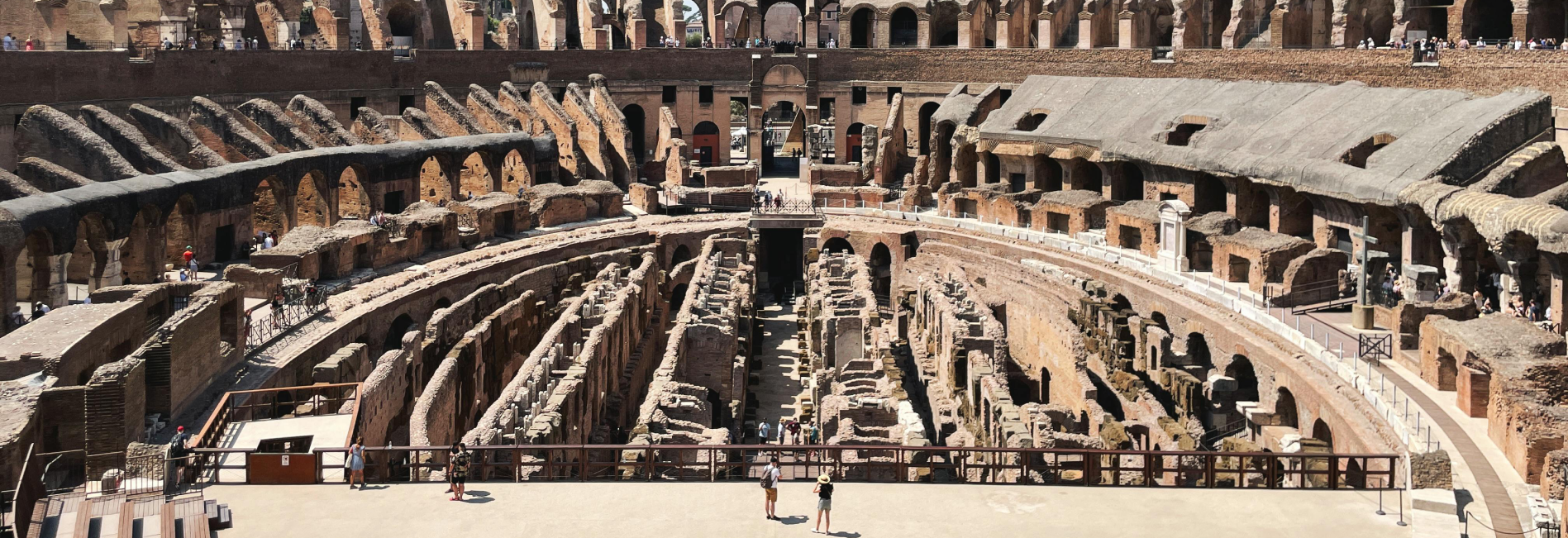
The Arena was the setting for the spectacles and offers a central perspective of the amphitheatre. It can only be visited when the purchased ticket expressly includes it; it is not part of the general route through the first and second levels.
There are tickets that combine the Arena with other areas of the Colosseum and options focused on this area. It is advisable to check the scope of each product because limited access to the Arena does not necessarily mean that you can visit the standard levels of the monument.
Arena and Underground: important differences
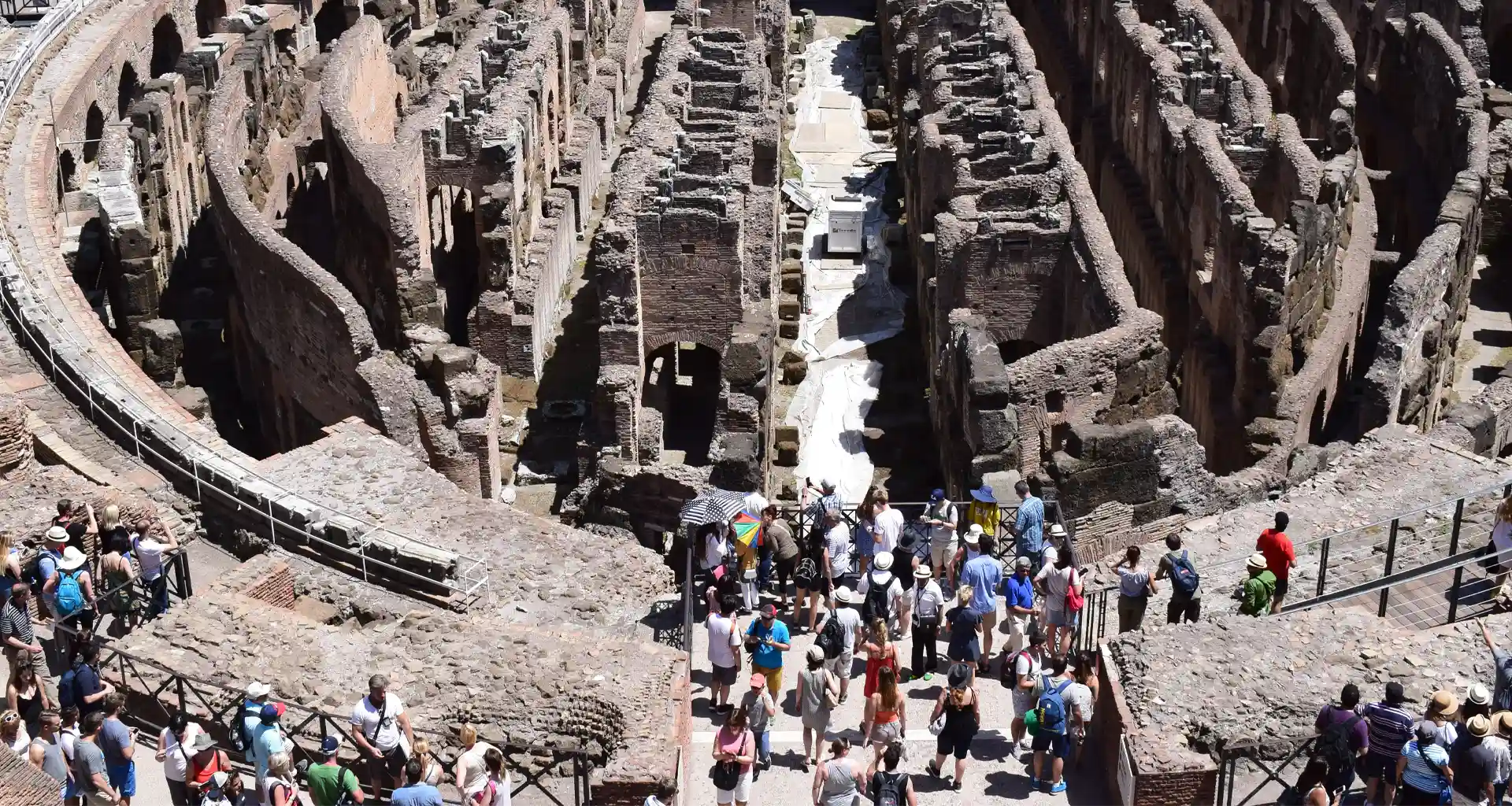
The Arena and the Underground are related, but they are different areas. The Arena is the platform where the performances took place; the hypogeum extends beneath it and preserves corridors, chambers and mechanisms used to prepare them.
A ticket with Arena access does not automatically include the Underground. These areas require a specific ticket option and are subject to availability. Checking the full name of the ticket helps avoid booking a different visit from the one you expected.
How much time you need for the visit
Time needed to visit the Colosseum
The amount of time you can spend in the Colosseum depends on the type of ticket and is usually limited by the conditions of the visit. For the general route, it is advisable to allow around one hour and fifteen minutes, while some special options may take a little longer.
The audio guide allows you to follow the route at your own pace and understand the function of the Arena, the seating areas and the visible hypogeum. If you want to spend time at the exhibitions and enjoy the views from the second level, avoid scheduling another booking immediately afterwards.
Time needed to explore the Roman Forum and Palatine Hill
The Forum and Palatine Hill form an extensive outdoor area with changes in elevation. A selective visit can take between two and three hours, depending on the number of monuments, stops and your pace when climbing the hill.
The Colosseum, Forum and Palatine Hill can take up a large part of a morning or afternoon. If you have limited time, choose your priority sites in advance; if you prefer a more relaxed visit, allow at least half a day for the archaeological complex.
How to get there and where to enter
Public transport
Colosseo station on Metro Line B is located next to the amphitheatre. Several bus lines and tram 3 also serve the surrounding area. Public transport is usually the easiest option, as traffic, driving restrictions and parking make access by car more difficult.
If you are walking from the historic centre, allow additional time and distinguish between the entrance to the Colosseum and the entrances to the Forum and Palatine Hill. The three sites are close to each other, but they do not share a single entrance checkpoint.
Entrance point and security checks
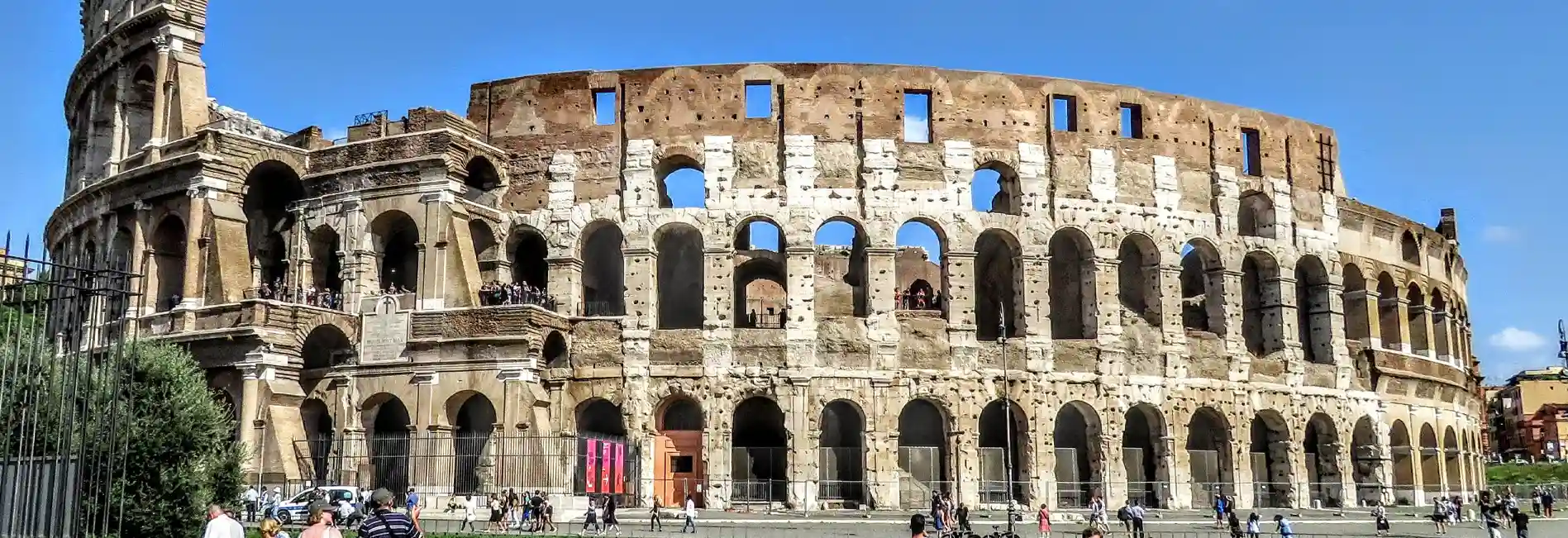
Individual access to the Colosseum is located in Piazza del Colosseo, near the Arch of Constantine and the Valadier spur. Follow the signs corresponding to your ticket type, as special areas may use different entrances or routes.
All visitors must pass through security checks. Bring only what you need, keep your ticket and documentation close at hand and avoid objects that may be subject to restrictions. There is no luggage storage service along the route, so travelling light makes security checks and moving around easier.
What is the best time to visit the Colosseum
The best time slot depends on the season and the rest of your itinerary. Early hours usually offer milder temperatures and leave the rest of the day free; later hours provide attractive light, but reduce the time available to explore the Forum and Palatine Hill afterwards.
In summer, avoid concentrating outdoor areas during the hottest hours and bring sun protection. In winter, remember that it gets dark earlier and some paths may be more uncomfortable in the rain. The decision should be coordinated with your reserved time and the actual duration of the entire visit.
Practical tips to make the most of your visit
Recommended clothing and footwear
The route combines stone surfaces, stairs, slopes and uneven paving. Wear comfortable, stable and supportive footwear; the park itself advises against high heels and flip-flops because of the characteristics of the terrain.
Adapt your clothing to the season and bear in mind that much of the Forum and Palatine Hill is outdoors. On warm days, a hat and water are useful; when it rains, it is advisable to walk more carefully on worn surfaces.
Permitted items and restrictions
Respect the marked routes and do not enter closed areas. Running, leaving the paths or leaning over railings is prohibited. These rules protect visitors and help preserve an especially fragile archaeological site.
Conditions regarding luggage, objects and equipment may be updated. Before travelling, check the applicable restrictions and avoid suitcases or bulky items. A small backpack with only the essential items is the most practical option for the visit.
Accessibility and visiting with children
The Colosseum has an accessible route covering much of the first level and lifts to reach the second. The Forum and Palatine Hill have accessible entrances and adapted sections, although slopes and uneven paving remain and should be taken into account when planning the route.
If you are travelling with children, adapt the duration, plan breaks and keep them supervised, especially on stairs and elevated areas. An audio guide can help turn the ruins into an understandable story; you can expand this context with the history and curiosities of the Roman Colosseum.
Which experience to choose to visit the Colosseum
For a first visit, admission to the Colosseum with the Forum and Palatine Hill offers a broad overview of the complex. If you want to stand on the ancient stage, choose an option that expressly mentions the Arena. If your priority is to explore the service areas beneath the floor, you will need a specific option that includes the Underground.
The audio guide is ideal for those who prefer to explore at their own pace while retaining context throughout the route. Before booking, compare the areas included, duration and ticket delivery method. If you are going to combine several monuments, also consult how to organise your visits to the Colosseum, Pantheon and Vatican Museums.