

What to See at the Colosseum, Roman Forum and Palatine Hill
The Colosseum, Roman Forum and Palatine Hill form one of the most important archaeological complexes in Rome. Within just a few metres are the city's great amphitheatre, the ancient centre of public life and the hill where the imperial residences were built.Although all three sites belong to the same archaeological park, each offers a different perspective on Ancient Rome. The Colosseum provides an insight into the architecture of public spectacles; the Forum brings together temples, basilicas and monumental arches; and Palatine Hill preserves the remains of the palaces from which the emperors ruled.
Selecting the essential points of interest in advance helps you better understand the remains and follow a coherent route. If you are planning your visit, you can check the available options and book your Colosseum tickets.
What to See at the Roman Colosseum
The Flavian Amphitheatre was designed as a venue for large public spectacles. Its interest is not limited to its exterior appearance: the route allows you to see how the Arena, seating areas, interior galleries and underground system were connected to make each performance possible.
The façade and exterior arches
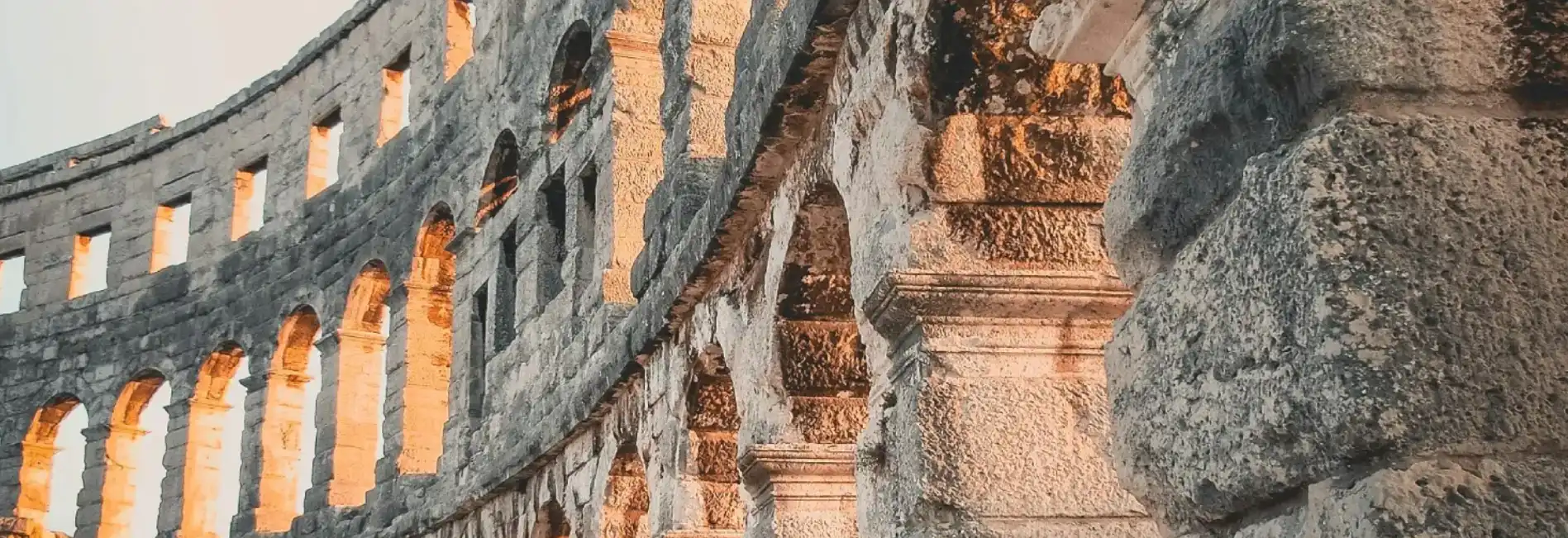
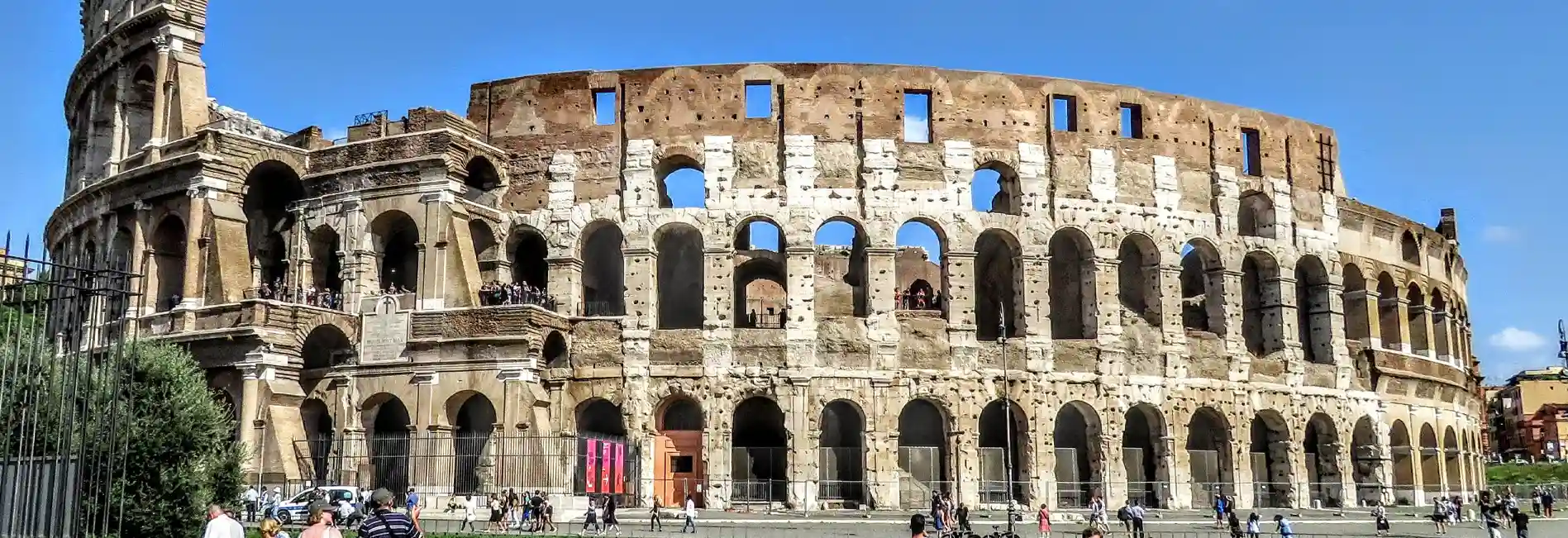
The façade combines rows of superimposed arches with different architectural orders. Walking around the monument reveals the contrast between the section preserved to a greater height and the part that lost its outer rings, a difference that exposes the complexity of its internal structure.
It is also worth looking at the entrances distributed around the building and the remains of the supports that held the velarium. These solutions made it possible to organise the movement of thousands of spectators and partially cover the seating areas. The context of its construction and its transformations is explored in History and Curiosities of the Roman Colosseum.
The seating areas and levels of the amphitheatre
The cavea was divided into sections and reflected the hierarchy of Roman society: each spectator's position depended on their social rank. Although much of the original seating has disappeared, the slope and layout of the levels make it possible to imagine how the audience was arranged around the Arena.
From the upper galleries, the structure of the building becomes particularly clear. The view takes in the Arena, the hypogeum and the elliptical perimeter, helping you understand how the corridors and stairways connected the entrances with the different seating areas.
The Colosseum Arena
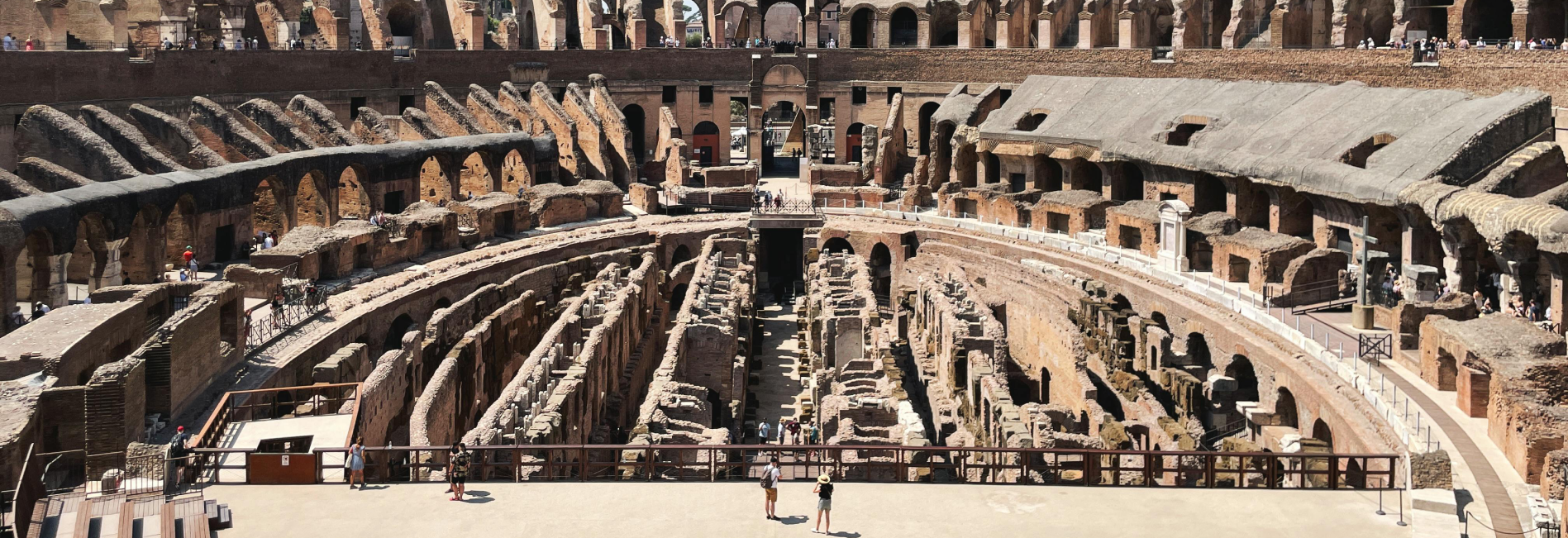
The Arena was the surface where gladiator fights, hunts and other spectacles took place. Part of the floor has been reconstructed, making it possible to identify the original level of the stage and its relationship with the seating areas.
Accessing the Arena offers a central perspective of the amphitheatre, but requires a ticket option that specifically includes this area. The Arena and Underground are separate areas: the former corresponds to the stage, while the latter are located beneath it.
The hypogeum seen from inside
The disappearance of much of the flooring has exposed the hypogeum, a network of corridors where the spectacles were prepared. Trapdoors, lifts, pulleys and passageways made it possible to move people, animals and stage elements up to the Arena.
The network can be seen from different points along the general route, although viewing it from above is not the same as walking through it. Access to the underground area requires a specific ticket, so it is important to distinguish between seeing the hypogeum and entering it.
The museum and exhibition areas
The route may include exhibitions featuring archaeological pieces, reproductions and resources explaining the construction and uses of the amphitheatre. These materials help reconstruct the original appearance of the Colosseum, which today has lost much of its cladding and decorative elements.
The exhibitions and open areas may change, so it is worth checking the information available for your chosen date. The building itself is the main feature of the visit, but these exhibitions help explain details that might otherwise go unnoticed among the ruins.
What to See at the Roman Forum
The Forum was the political, religious and commercial centre of Rome for centuries. Its remains belong to different periods and do not form a uniform scene; therefore, identifying some key buildings makes the complex easier to understand and helps you imagine the ancient square beyond the isolated columns.
The Via Sacra
The Via Sacra was one of the main routes through the Forum and was associated with ceremonies and triumphal processions. Walking along it connects several of its major monuments and helps you understand how the public space was organised among temples, basilicas and arches.
The Arch of Titus
Located in the elevated area connecting the Forum with Palatine Hill, the Arch of Titus was erected after the emperor's death. Its reliefs depict the triumph associated with the Jewish War, including a representation of the menorah. The decoration preserves a political narrative carved in marble and visually marks one of the ends of the Via Sacra.
The Temple of Saturn
The eight columns that remain standing make the Temple of Saturn one of the most recognisable silhouettes in the Forum. The building was associated with the worship of Saturn and the safekeeping of the public treasury. Its position beside the slope of the Capitoline Hill helps identify the western boundary of the ancient square.
The Basilica of Maxentius and Constantine
The enormous surviving vaults reveal the scale of this civil basilica, begun under Maxentius and completed during Constantine's reign. It was not a temple, but a space intended for public and judicial functions. Its height gives an idea of the monumentality of 4th-century Rome, even when the Forum had already changed profoundly compared with the Republican period.
What to See on Palatine Hill
Palatine Hill contains the remains of houses, sanctuaries and palaces built over many centuries. Tradition placed the origins of Rome here, while the emperors later transformed the hill into their main residential area. The route combines archaeology, gardens and views over the ancient city centre.
The imperial palaces
The Domus Tiberiana, Domus Flavia and Domus Augustana show how the hill was progressively occupied by large palace complexes. Among the walls, courtyards and former rooms, you can distinguish the separation between spaces for public representation and the private quarters of the imperial court.
The scale of the remains is easier to appreciate when looking at the terraces and structures extending along the slopes. The Latin term Palatium eventually became associated with the concept of a palace because of the close relationship between the hill and the imperial residences.
The Farnese Gardens
The Farnese Gardens introduce a much later period into the landscape of Palatine Hill. During the Renaissance, the Farnese family created a garden here with paths, fountains, pavilions and vegetation over part of the ancient ruins. The superimposition of garden and archaeological site shows how the hill continued to evolve after the fall of the Empire.
Viewpoints over the Forum and Circus Maximus
From the terraces of Palatine Hill, you can enjoy some of the most complete panoramic views of the archaeological area. On one side, you can identify the temples and basilicas of the Forum; on the other, the vast open space of the Circus Maximus stretches out below. The elevated position makes it possible to connect monuments that appear isolated at ground level..
How to Organise Your Visit to the Colosseum, Forum and Palatine Hill
An easy sequence to follow is to begin at the Colosseum and then continue to the Roman Forum and Palatine Hill. In this way, the visit progresses from the building used for spectacles to the public centre and the imperial residences, following a progressive interpretation of the ancient city.
Entry to the Colosseum takes place during the reserved time slot, while the Forum and Palatine Hill form a connected area explored on foot. It is advisable to select your priority sites and allow enough time for the climb up the hill. You can find more planning information in How to Visit the Colosseum.
The Best Places to View and Photograph the Colosseum
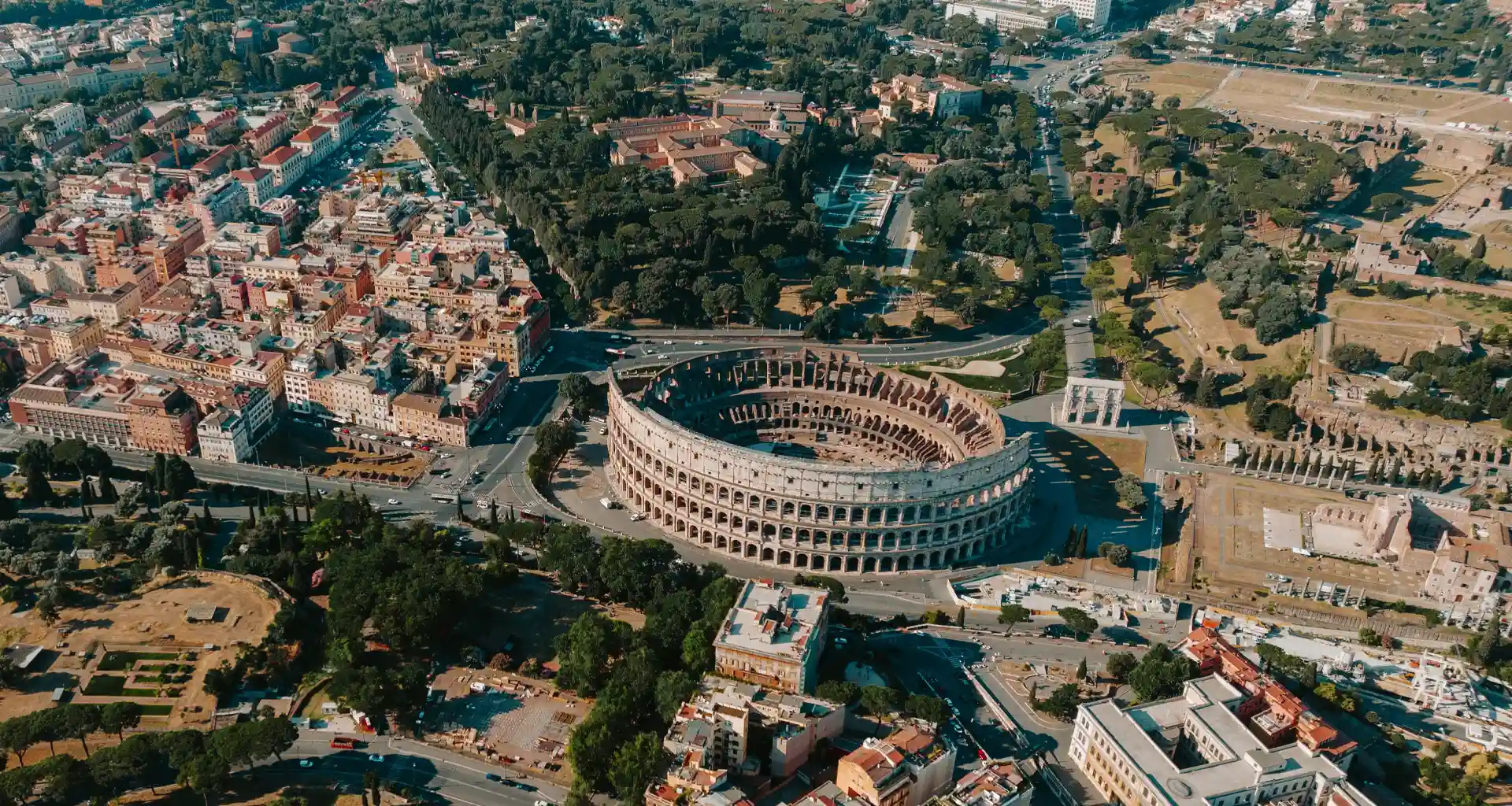
The elevated area near the Temple of Venus and Roma offers a frontal view of the amphitheatre and makes it possible to appreciate its shape within the archaeological landscape. The area around Colle Oppio offers another wide perspective, while the arches of the Colosseum itself frame views of the Forum, Palatine Hill and the Arch of Constantine.
Inside, the upper levels are the best points for capturing the geometry of the Arena and the hypogeum. Outside, changing position allows you to compare the preserved façade with the exposed section of the structure. The side light during the first and last hours of the day highlights the relief of the arches, although the best perspective will depend on the route available.
Understanding what you are looking at turns the complex into more than just a succession of ruins. After exploring the Colosseum, Forum and Palatine Hill, you can continue discovering other major monuments with our guide Colosseum, Pantheon and Vatican Museums: How to Organise Your Visits in Rome.